Dec 302010
by Mark Konold and Alexander Ochs

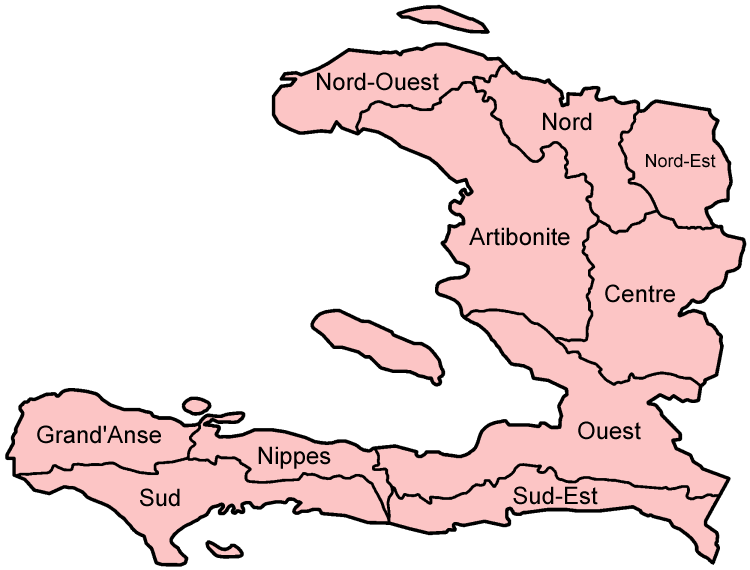
Recently the Brookings Institution hosted a panel that examined Haiti’s political and humanitarian developments since the January 2010 earthquake. A theme that came up regularly was that of competing priorities such as turbulent elections, a cholera outbreak, a lack of dependable energy supply, and gender-based violence. As the Worldwatch Institute prepares to develop a Low-Carbon Energy Roadmap for Haiti, some have questioned whether limited donor resources should be channeled into something more pressing than assessing and improving the country’s energy infrastructure. Is an energy roadmap really needed right now, or are other matters more important?

The cholera outbreak in Haiti is an urgent matter that deserves all the attention it is currently receiving. However, we must keep in mind that a lack of proper sanitation – due to a lack of electricity – helped cause the recent outbreak. Had the country’s energy infrastructure been more robust and sustainable, basic sanitation and electricity in hospitals might not have been lost and the current epidemic might have been avoided.

[Read the rest of this ReVolt blog]

Sep 062010

While the US Senate has backed off on climate legislation, China is considering launching emissions-trading programmes within five years, write Alexander Ochs and Haibing Ma.

Just when leaders in the United States Senate admitted to abandoning their plan of issuing a federal climate bill by the end ofTianjin_port_cap-and-trade_thumbthis year, top Chinese officials were discussing how to launch carbon-trading programmes under their country’s next (12th) Five-Year Plan (2011-2015). Serving as China’s overarching social and economic guidance, Five-Year Plans consistently lay out the most crucial development strategies for this giant emerging economy. Once included in the plan, carbon trading will be viewed as part of China’s national goals and will be domestically binding. This occurred most recently with the country’s 2010 energy-intensity target, which called for a 20% reduction from 2005 levels and was disaggregated into provincial and local targets, with local officials held accountable for achieving them.

In short, China seems to be accelerating full-throttle toward a low-carbon economy. Chinese policymakers have been eyeing a domestic emission-trading scheme for a while. In August 2009, National Development and Reform Commission (NDRC) deputy director Xie Zhenhua announced that China would launch a pilot carbon-trading programme in selected regions and/or sectors — basically the same message now discussed for the Five-Year Plan. On one hand, this reiteration demonstrates that the Chinese government is seriously considering such a market-based mitigation mechanism; on the other hand, the fact that the programme’s status is still in discussion one year later shows that putting cap-and-trade into action might be not be so easy in China either.

[Read our full article on Chinadialogue]

Aug 262010

By Camille Serre and Alexander Ochs

After having shed some light on French climate and energy legislation, let’s proceed with our review of European progress toward clean energy economies. Typically, the Scandinavian countries and Germany have set the example in the European renewables field. Yet lately, a Southern country—Portugal—has attracted media attention after delivering its National Renewable Energy Action Plan to the European Commission this June.

In 2009, Portugal ranked 3rd in Europe in wind power capacity per capita - Flickr Creative Commons / Mafalda Moreira Santos

In 2009, Portugal ranked 3rd in Europe in wind power capacity per capita - Flickr Creative Commons / Mafalda Moreira Santos

Portugal has made dramatic changes in its energy policy over the last five years under the government of Prime Minister Jose Socrates. The country’s installed renewable energy capacity more than tripled between 2004 and 2009, from 1,220 megawatts (MW) to 4,307 MW, and renewables now represent roughly 36 percent of electricity consumed. Thanks to this performance, Portugal currently ranks 4th in Europe in energy production from renewables. Socrates seems to know what he is doing, and it looks like his previous experience has paid off. Like Germany’s chancellor Angela Merkel, Socrates was Minister of the Environment before becoming head of his country’s government. The environment seems to be a springboard for European politicians’ careers.

Of course, Portugal benefits from favorable conditions for renewables as well: a strong wind resource, great hydropower, good tidal waves potential, and a high sunshine rate. After the country removed several dams in recent years, Socrates’ government has focused instead on wind power development, under most conditions the cheapest renewable energy source after hydropower. With spectacular growth in wind energy production of over 600 percent between 2004 and 2009, Portugal now ranks 6th in Europe in total installed capacity and 3rd in capacity per capita, behind only Denmark and Spain. Some even expect Portugal to overtake its neighbor Spain in per capita wind energy production as early as this year.

[Read both parts of this blog on the ReVolt website]

Aug 182010

by Camille Serre and Alexander Ochs

In Part 1 of this blog, we described the climate and energy measures that France plans to pursue as part of its new environmental law, Grenelle 2. This set of policies suggests that France may in fact be paving the way toward a low-carbon economy. Unfortunately, the picture is tarnished by an ongoing controversy about renewable energy development in the country. 

Grenelle 2 certainly contains some positive measures in the renewables sector. For instance, it sets a goal that 23 percent of France’s energy use must come from a mix of renewable energy sources by 2020—most likely from hydropower (the nation’s largest renewables source so far), wind power, and biomass. The law calls for regional climate and energy mapping to assess climate-related risks within the country as well as to determine domestic energy needs, air pollution, and greenhouse gas emissions. Consequently, adaptation strategies and monitoring instruments will be developed. In addition, local and regional authorities that are responsible for 50,000 inhabitants or more, as well as companies with over 500 employees, will be required to conduct emissions assessments.

[Read the rest of this ReVolt blog here]

Aug 172010

with Camille SerreGrenelle

While the United States is unlikely to pass a climate bill in the near future, there may be greater hope from one of the country’s closest allies: France. A few months ago, France passed a major bill that will deeply transform the country’s environmental law, including its approach to climate change. But while the outcomes of the measure are promising, a variety of criticisms remain.

After an exhausting legislative process, the “Grenelle de l’Environnement” ended with the adoption of the “Grenelle 2” bill this May. Enacted on July 13, three years after the process was launched by then-newly elected president Nicolas Sarkozy, the new legislation covers environmental topics such as climate and energy, biodiversity protection, public health, sustainable agriculture, waste management, and the governance of sustainable development. In addition to being a comprehensive environmental bill, Grenelle 2 implicitly defines the French sustainable development strategy for years to come.

Grenelle de l’environnement was named after the so-called “negotiations of Grenelle” on wages that took place in 1968, when France was paralyzed by a general strike. Back then, the primary negotiators were the government, unions, and employers. The Grenelle de l’environnement, launched in 2007, extended the consultation to five main stakeholder groups—the State, employers, unions, environmental NGOs, and local governments—to bring it more in line with the participatory nature of sustainable development.

On the climate front, France is likely to meet its current emissions reduction goals. [Read the rest of this ReVolt Blog here]

Aug 102010

By Haibing Ma and Alexander Ochs

Recently, a China Daily news report caught Uncle Sam’s attention, presumably at an inconvenient time: just when the U.S. Senate finally admitted to abandoning its plan of issuing a federal climate bill by the end of this year, top Chinese officials were discussing how to launch carbon trading programs under their country’s next Five-Year Plan (2011–15). Serving as China’s overarching social and economic guidance, Five-Year Plans consistently lay out the most crucial development strategies for this giant emerging economy. Once included in the plan, carbon trading will be viewed as part of China’s national goals and will be domestically binding. This occurred most recently with the country’s 2010 energy intensity target, which called for a 20 percent reduction from 2005 levels and was disaggregated into provincial and local targets, with local officials held accountable for achieving them. In short, China seems to be accelerating full-throttle toward a low-carbon economy.

Chinese policymakers have been eyeing a domestic emission-trading scheme for a while. Last August, Xie Zhenhua, Deputy Director of the National Development and Reform Commission (NDRC), announced that China will launch a pilot carbon trading program in selected regions and/or sectors—basically the same message conveyed in the recent China Daily story. On one hand, this reiteration demonstrates that the Chinese government is seriously considering such a market-based mitigation mechanism; on the other hand, the fact that the program’s status is still in discussion a year later shows that putting cap-and-trade into action might be not be that easy in China either. [Read more on Worldwatch's ReVolt blog]

Jul 132010

Contribution to Euronews CommentVisions

In 2007, renewable energy already provided 18% of the world’s total final energy supply, greatly exceeding earlier predictions. While global GDP increased by 156% between 1990 and 2007, energy demand “only” rose by 39%. A recent Worldwatch study has outlined a new, technologically and economically viable 2030 global low-carbon scenario. It demonstrates that energy demand can be reduced by another one third compared to the business-as-usual scenario produced by the International Energy Agency which is used by many as the “reference scenario”. In our scenario 50% – half! – of the remaining energy demand in 2030 can be provided by renewables decreasing energy-related CO2 emissions by 52%.

Natural gas will play a major role in covering the other 48%. Natural gas is widely available and produces less greenhouse gas emissions and less local air and water pollution than coal and gas. It also does not create the security, economic, and health burdens of nuclear energy. What is more, natural gas can serve as an important ally of renewables. Since gas power plants can be switched on and off relatively easily, we can make sure that the maximum amount of renewables are used despite their fluctuations on a given day. Environmentally such a major transition of the global energy system is a necessity if want to avoid catastrophic climate disruptions. Technologically and economically, our scenario is feasible. What is still lacking, is the political will to make it reality.

http://www.commentvisions.com/2010/07/01/topics/society-and-sustainability/progress-towards-sustainability/energy-the-next-20-years-part-1/

Jun 082010

 Co-author: Shakuntala Makhijani

EU Climate Action Commissioner Connie Hedegaard

 The European Environment Agency (EEA) yesterday released its greenhouse gas inventory for 2008, showing a two-percent fall from 2007 levels across EU-27 countries and an 11.3-percent reduction from 1990 levels. The new data also show that the EU-15 (the 15 only EU members in 1997 when the Kyoto Protocol was negotiated) have reduced emissions by 6.9 percent since 1990, putting those countries on track to meet their Kyoto Protocol commitment of reducing 2008-2012 emissions by an average of 8-percent below 1990 levels. The European Commission points out that the EU-15 emission reduction—a 1.9-percent drop from 2007 to 2008—came as the region’s economy grew 0.6 percent, suggesting that economic growth and emissions cuts can be compatible.

Just last month, the European Commission had announced that emissions covered under the EU Emissions Trading System (ETS) fell even more rapidly: verified emissions from covered installations were 11.6-percent lower last year than in 2008. EU Climate Action Commissioner Connie Hedegaard cautioned that these reductions are largely due to the economic crisis, as opposed to ambitious actions by covered industry. The crisis has also weakened price signals in the trading scheme and slowed business investment in emissions-reducing innovations.

Earlier this year, the European Commission began arguing that the Union should commit to deeper cuts than a 20-percent reduction from 1990 levels by 2020, calling instead for a 30-percent decrease. It released figures showing that, largely due to the economic crisis, the annual costs for cutting emissions will be lower than originally estimated by 2020. In 2008, the EU estimated that €70 billion per year would be necessary to meet the 20-percent target, but this cost estimate has now fallen to just €48 billion. For a 30-percent target during the same timeframe, the new projected annual cost is €81 billion—only €11 billion more than what EU countries have already accepted under the 20-percent target.

[Please read the rest of the blog on ReVolt]

Dec 242009

The Copenhagen UN climate conference ended last Saturday with a weak agreement, not the groundbreaking treaty many had hoped for. With more than 100 heads of governments and many more parliamentarians and dignitaries, COP-15 became the largest assembly of world leaders in diplomatic history. The Copenhagen conference had been planned out for two years in many small informal and large official meetings, following the 2007 Bali Action Plan in which nations had agreed to finalize a binding agreement this December. The outcome falls far short of this original goal. Delegates only “noted” an accord (“the Copenhagen Accord”) struck by the United States, Brazil, China, India, and South Africa that has two key components: first, it sets a target of limiting global warming to a maximum of 2 degrees Celsius over pre-industrial times; second, it proposes $100 billion in annual aid for developing nations starting in 2020 to help them reduce emissions and adapt to climate change.

2 degrees Celsius is seen by mainstream science as a threshold for dangerous climatic changes including sea-level rise and accelerated glacier melt, as well as more intense floods, droughts, and storms. Many scientists also believe that a majority of worldwide ecosystems will struggle to adapt to a warming above that mark, and more recently have set the threshold even lower, at 1.5 degrees Celsius. The accord, however, lacks any information on how this goal of preventing “dangerous” climate change, which had already been set by the 1992 United Nations Framework Convention, would be achieved. It is generally assumed that in order to keep global warming below 2 degrees, worldwide emissions have to

Nov 042009
Photo courtesy of Jonathan Ernst/Reuters

As a former Minister of the Environment turned Chancellor, Angela Merkel had already proven those wrong who surmised that environment positions are a dead end to high-rising political aspirations; now she became only the second German politician (after Konrad Adenauer, the first head of a German government after the Second World War, in 1957) who received the honor to address the U.S. Congress; and as a widely respected leader on environmental issues who is, at the same time, the leader of a conservative party, she would be well positioned to appeal to cautious Republicans when talking about climate change and energy reformation—at least I had hoped so in a recent interview with Reuters.

Angela Merkel in her speech on Capitol Hill yesterday, just weeks after her reelection for a second term (this time as a leader of a center-right coalition) was moved by the honor and the standing ovations she received from U.S. lawmakers even before she had started her speech. Following up on her promises, she spent a good portion of her talk on climate change, urging Congress and the Obama administration to take bold steps to address the issue, in her view one of the “great tests” of the 21st century. “We all know we have no time to lose,” she said.

Read the rest of the story on Dateline: Copenhagen.

Jun 262009

cop15_logo_imgHalf a year before the U.N. climate conference in Copenhagen, negotiators are far from agreeing on key components of a global climate deal. As envisioned in the 2007 Bali Climate Action Plan (or “Bali Roadmap”), the summit in December is supposed to deliver a follow-up agreement to the Kyoto Protocol under the United Nations Framework Convention on Climate Change (UNFCCC), which expires at the end of 2012.

Ever since Bali, however, progress in the negotiations has been slow. Only recently have the delegations entered full negotiation mode—which is necessary right now, the most pivotal year since the 1992 UNFCCC. From June 1 to 12, more than 4,600 participants—including government delegates from 183 countries as well as business, industry, environmental organizations and research institutions—met in Bonn, Germany, to discuss key negotiating texts that will serve as the basis for an agreed Copenhagen outcome. The gathering in Germany was the second in a series of five major U.N. negotiating sessions this year leading up to the Copenhagen summit in December (…).

Please find the full article in Grist Magazine here.

Nov 202008

Lange Zeit schien es so, als würde John McCains Schachzug aufgehen. Die bis dahin auf Bundesebene weithin unbekannte Sarah Palin hatte dem republikanischen Präsidentschaftskandidaten zwischenzeitig ein derartiges Zwischenhoch eingebracht, dass dieser dem Umfrageinstitut Gallup zufolge Mitte September erstmals seit Beginn des Wahlkampfs vor seinem demokratischen Herausforderer Barack Obama lag. Fast ein Drittel der Befragten hatte damals ausgesagt, dass sie wegen Palin eher für McCain stimmen würden. Palin ist eine gute Rednerin. Ihr Augenzwinkern und ihr Sekretärinnen-Outfit haben für manchen Zuschauer Sexappeal. Ihre privaten Herausforderungen (ihr eigenes fünftes Kind kam mit dem Down-Syndrom zur Welt, ihre minderjährige Tochter ist gerade unverheiratet schwanger) bieten der Boulevardpresse den Stoff, den viele Amerikaner ernster politischer Berichterstattung vorziehen. Ihr mit Optimismus in jugendlichem Schwung und provinziellem Slang vorgetragener Erzkonservatismus und ihre Angstmacherei sprechen Wählergruppen an, die häufig selbst wenig lebensfroh, jung und elanvoll, aber umso erzkonservativer und ängstlicher in die Welt schauen und aus Gegenden sind, in denen man Sätze ganz wie die Gouverneurin aus Alaska mit “Gotcha” beginnt und “Betcha” beendet.  Weiter zum Blog auf Deutsche Welle.

Oct 212008

Nach Ansicht der meisten amerikanischen Kommentatoren hat sich der republikanische Präsidentschaftskandidat John McCain im letzten Fernsehduell mit seinem demokratischen Herausforderer Barack Obama besser geschlagen als in den beiden vorangegangen Debatten. Das lag mit Sicherheit auch daran, dass die beiden Kontrahenten bei diesem Gespräch an einem Pult Platz nehmen durften. In der zweiten Debatte war McCain während der Redezeit Obamas mehrfach im Hintergrund zu sehen gewesen, wie er scheinbar orientierungslos auf und abschritt. Wenige Tage später ließ die Comedy-Show Saturday Night Life daher ein McCain Double 45 Minuten lang immer und immer wieder ziellos durchs Bild schleifen – neben den Parodien auf McCains Vize Sarah Palin ein klares Highlight der bisherigen Wahlsatiren. Weiter zum Blog auf Deutsche Welle

Sep 082008

So sehr die beiden Präsidentschaftskandidaten in den kommenden Monaten um die Wähler der Mitte kämpfen werden – die politischen Kernaussagen ihrer Nominierungsreden unterschieden sich doch deutlich. In beiden Fällen hat dies primär damit zu tun, dass es den Kandidaten bei den Parteitagen in erster Linie darum ging, zunächst die eigenen Reihen zu schließen… Mein Blog für Deutsche Welle

Sep 012008


When the Olympic fire was set alight during the Games’ opening ceremony, there was a giant wave of smog hanging over Beijing. Like any other day of the year, the air pollution was several times above what the World Health Organization considers safe. Many competitors were so concerned about their personal wellbeing that they restricted their visit to the Ancient City to the days on which they compete, thus missing out on a once-in-a-lifetime chance to inhale the legendary Olympic spirit for the duration of the games. Overpopulation was not amongst the problems the athlete village faced. And however clean, colorful, and crystal-clear the opening ceremonies were – when the cameras conveyed the first images of spectators with masks over their mouths, the hosts’ delight soured rather suddenly. Most of us, however, were not surprised. After all, this is the China we imagine. A political apparatus so keen to receive world recognition and a population so eager to catch up with the wealthy elsewhere have unleashed such a thriving economy that there is no room for environmental concerns, least of all protective regulation.

It is this dusky image of China that has to a large extent shaped our diplomatic attitude towards this rapidly industrializing giant. Nowhere more so than in the United States, the continuous finger-pointing at China has been used as an excuse for not taking more vigorous action on global environmental problems at home. READ THIS EXCLUSIVE OP-ED FOR WWW.ALEXANDEROCHS.COM

Jul 182008

“Laundry is the only thing that should be separated by color” – Dreckwäsche ist das einzige, was nach Farbe getrennt werden sollte. An diese Losung der schwarzen Befreiungsbewegung hat sich die New York Times, einmal mehr, nicht gehalten. Sie machte Mitte dieser Woche mit der Schlagzeile auf: “Poll Finds Obama Isn’t Closing Divide on Race” – “Meinungsumfrage zufolge hebt Obama die Rassentrennung nicht auf”. Erste Seite, oben Mitte. In regelmäßigen Abständen befragt die liberal-progressivste der großen amerikanischen Tageszeitungen die Wählerschaft nach ihren Wahlpräferenzen, selbstverständlich nach Hautfarbe getrennt. DEUTSCHE WELLE WAHLCHECK

Jun 272008

Das Thema Energie bestimmte den Präsidentschaftswahlkampf der vergangenen Woche. John McCain und Barack Obama stellten ihre Pläne zur Sicherung der amerikanischen Energieversorgung vor. Das Allerbeste vorneweg: Beide Kandidaten nehmen den Klimawandel als eine große Bedrohung ihres Landes wahr. Sie erkennen an, dass Klimaschutz eine radikale Änderung der Art und Weise erfordert, wie Energie hergestellt und genützt wird. Um die schlimmsten Folgen der globalen Erwärmung noch verhindern zu können, sind viele Maßnahmen in den unterschiedlichsten Bereichen unserer Wirtschafts- und Sozialsysteme nötig. Energieproduktion und –konsum kommt jedoch eine Schlüsselrolle zu.

Die Vorschläge beider Kandidaten weichen von der klimapolitischen Passivität der Bush-Regierung in geradezu konterkarierender Form ab: Beide fordern eine ambitionierte nationale Klimaschutzpolitik mit verpflichtenden Reduktionszielen für den Treibhausgasausstoß der großen Energieproduzenten. Das Kernstück bildet bei beiden Bewerbern ein nationales Emissionshandelssystem. Auch international wollen Obama und McCain die USA in eine klimapolitische Führungsposition bringen. Deutsche Welle WAHLCHECK

Jun 062008

Nun also ist es so sicher wie das Amen in der Kirche: Barack Obama wird der Präsidentschaftskandidat der Demokratischen Partei. Hillary Clinton hat auf Drängen führender Parteifreunde – und nachdem eine Reihe von ihnen öffentlich ihren Wechsel zu Obama bekannt gegeben hatten – den Rücktritt von ihrer Kandidatur für das Wochenende in Aussicht gestellt. Natürlich nicht, ohne auch diese Niederlage wie einen Erfolg aussehen zu lassen. Nachdem die Abschlussveranstaltung zunächst für Freitag (06.06.2008) angekündigt war, wurde sie bald darauf auf Samstag verlegt, weil, wie es hieß, so viele ihrer Unterstützer sie noch einmal sehen wollten. Die Clintonsche Wahlkampfmaschine – es scheint gar nicht so einfach, sie jetzt so plötzlich zum Stehen zu bringen. DW WAHLCHECK

May 162008

Ausnahmsweise war sich Hillary Rodham Clinton mit ihrem Senatskollegen und republikanischen Präsidentschaftsgegner John McCain einmal einig: Bei bald vier Dollar pro Gallone Sprit müsse der amerikanische Autofahrer entlastet, die bundesweite Benzinsteuer von 18,4 Cents pro Gallone daher für die Hauptreisemonate im Sommer gestrichen werden. Und Obama? Der inzwischen im Kampf um das Präsidentschaftsticket der Demokraten praktisch uneinholbare Senator aus dem Mittleren Westen enttarnt den Vorschlag als das, was er in Wirklichkeit ist: Populismus pur. Und er nennt die falsche Signalstellung und die konkreten negativen Konsequenzen eines solchen Vorhabens beim Namen. DEUTSCHE WELLE

May 012008

Wenn sich zwei streiten, freut sich der Dritte. Wird diese alte Redeweisheit auch für den Ausgang der amerikanischen Präsidentschaftswahlen gelten? Was die beiden verbliebenen Bewerber um das Ticket der Demokratischen Partei, Hilary Clinton und Barack Obama, anbelangt, sind sich die meisten Beobachter schon seit geraumer Zeit einig: Das sich seit Monaten hinziehende Gezerre um die Kandidatur könne sich letztlich nur negativ auf die Ambitionen beider Aspiranten auswirken. So wüchse zugleich die Gefahr, dass der Gewinner der Demokratischen Primaries den Hauptschaukampf ums Weiße Haus im November gegen den republikanischen Herausforderer John McCain verlieren würde; erstens, weil innerhalb der eigenen Partei das Tischtuch zwischen den Anhängern beider Lager nach einem ätzend langen und immer verbissener geführten Kampf für immer zerschnitten sei; und zweitens, weil der Kandidat der gegnerischen Seite diese Zeit nützen könne, um die eigene Partei zu einen, die Schwächen des Widersachers zu studieren und sich als Konsensfigur aller Amerikaner in Szene zu setzen. DEUTSCHE WELLE WAHLCHECK